
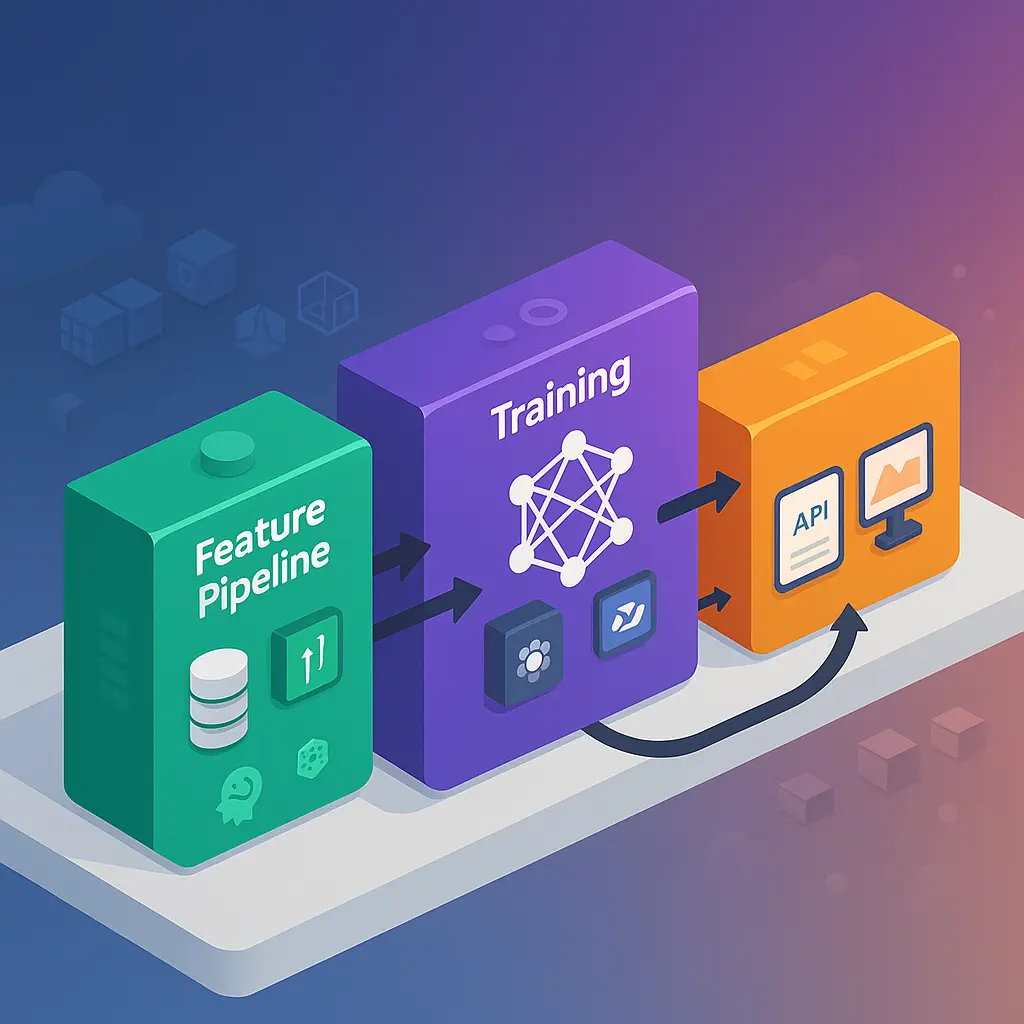
What is AI Native and why should I care?
Michael Mueller16 min read
Learn to navigate the Cloud Native to AI Native transition. Avoid common mistake…
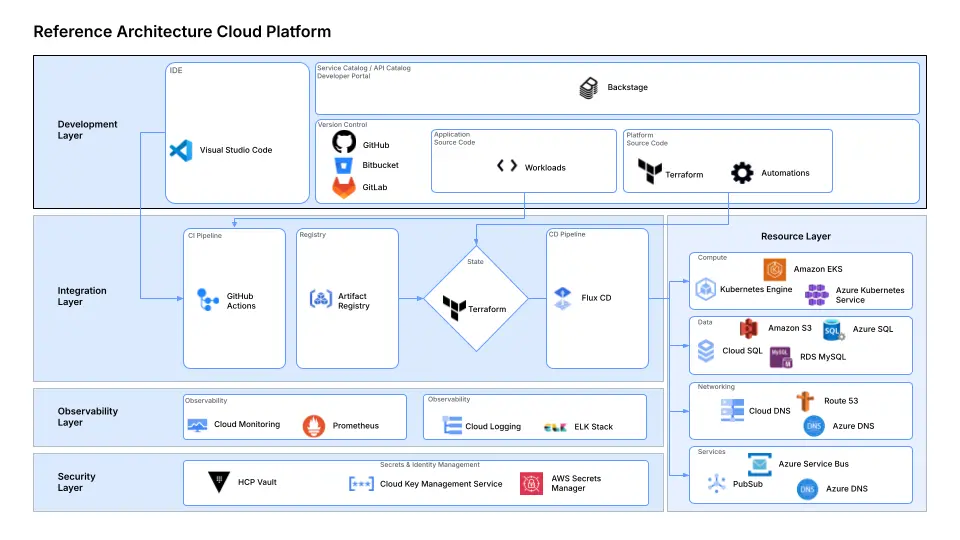
In the rapidly evolving technological landscape, organisations need a robust framework to streamline software development and operations that moves beyond cloud native and DevOps. Platform engineering offers a comprehensive approach to designing and managing platforms using platform engineering principles. This reference architecture aims to provides a blueprint for building an efficient, scalable, and secure platform that empowers developers and accelerates software delivery.
While cloud native provided scalability and flexibility, it often introduced complexity that hindered developer productivity. Platform engineering addresses these challenges by having engineers that focus on developer experience and abstracting away the underlying complexities to offers a unified platform with self-service capabilities.
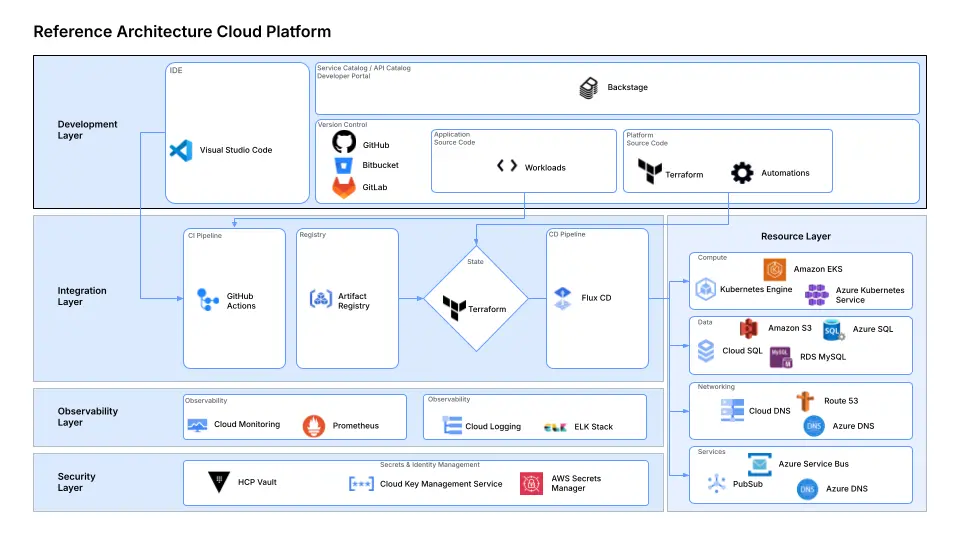
This reference architecture outlines some of the key components of a platform and their interactions. It serves as a guide for organisations that meets business and developer needs.
Development Layer
Integration Layer
Observability Layer
Security Layer
Resource Layer
Below is an overview of the platform engineering reference architecture:
To successfully implement this platform engineering reference architecture, organisations should consider the following steps to ensure an excellent developer experience (DX):
Prioritise Developer Needs
Developers are the primary users of the platform. Involve them in the design process, feature prioritisation, and testing phases. The platform should offer a "golden path" that simplifies their workflow without restricting flexibility. By focusing on real developer needs, the platform becomes a valuable tool rather than an imposed constraint.
Treat the Platform as a Product
Establish a dedicated central team responsible for the platform, much like a product team. This team should ensure the platform is easy to use and continuously evolves to meet developer requirements. By adopting a product mindset, the platform remains aligned with organisational goals and user needs.
Encourage Decentralised Contributions
Relying on the platform team alone for platform development doesn't scale. Instead, adopt an "open-source" model where teams across the organisation can contribute to the platform. This approach leverages collective expertise and creates ownership of the platform outside of the platform team.
Define Success Through Usage
The platform's success should be measured by its adoption. Aim to build the platform in a way so that developers choose to use it voluntarily. Monitor metrics like daily active users, contributions from various teams, and feature utilisation.
Measure Impact with Clear KPIs
Establish key performance indicators (KPIs). For example, measure the time from idea to deployment or track new developers' onboarding times. These metrics help in assessing productivity gains and identifying areas for improvement.
Leverage Existing Capabilities
Integrate tools and technologies already adopted within the organisation, such as CI/CD pipelines, backlog management systems, and container platforms. This approach maximises existing investments and eases the transition for developers familiar with these tools.
Build Capabilities Early
Develop platform engineering skills within your teams from the beginning. Provide curated learning paths for both consumers (developers using the platform) and providers (teams integrating services into the platform), this ensures sustainable growth and platform maturity.
Promote the Platform Internally
Foster an engineering culture that embraces the platform. Organise events like hackathons, demo days, or plugin development sessions that encourage adoption and contribution. Identifying platform champions within teams can help in spreading awareness and best practices.
Manage Organisational Change
Recognise that implementing platform engineering is as much about organisational change as it is about technology. Establish strong governance, cultivate a collaborative culture, and adjust operating models to support platform adoption effectively.
Think Big, Start Small
While it's essential to have a long-term vision for the platform, begin with a minimum viable product (MVP) focused on a specific use cases or teams. This approach allows for early feedback and iterative improvements while laying the groundwork for future scalability.
This platform engineering reference architecture provides a comprehensive framework for organisations looking to evolve beyond traditional cloud computing. By implementing this architecture, organisations can build internal platforms that streamline development processes, enhance security, and promote scalability. Embracing platform engineering positions your organisation to meet current challenges and adapt to future technological advancements, ensuring sustained success in a dynamic digital environment.
Ready to take the next step in your platform engineering journey? Our team of experts is here to help you navigate the complexities of building and evolving cloud-native platforms. We'll work with you to set up a platform engineering team tailored to your organization's needs, ensuring your platforms achieve the maturity required for long-term success. Contact us today to unlock the full potential of your cloud-native platforms.
Learn to navigate the Cloud Native to AI Native transition. Avoid common mistake…
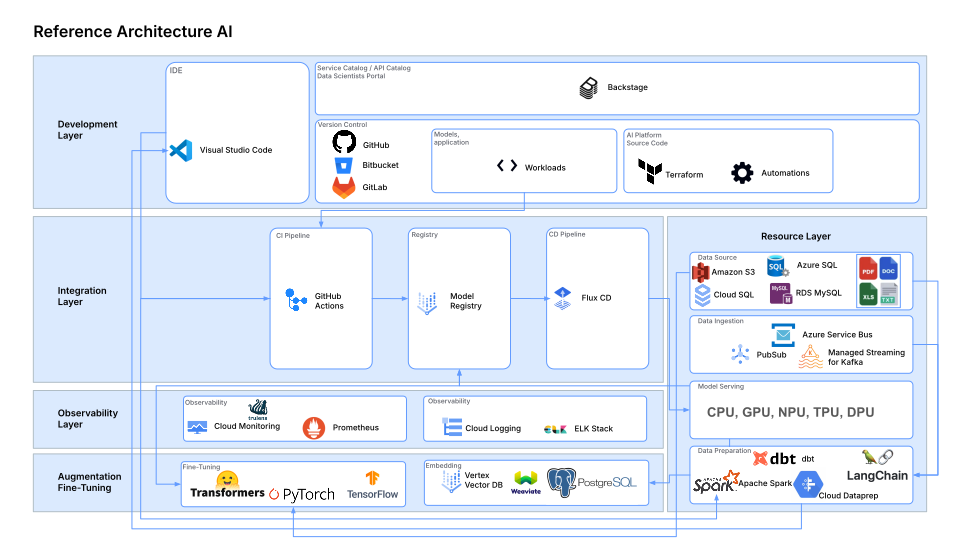
Learn how to build a comprehensive AI platform architecture. From development to…

Maximize ROI in platform engineering by treating platforms as products. Discover…
Get a shared vocabulary of proven Transformation Patterns, common Anti-Patterns, and Paradigm Patterns to have more effective, data-driven conversations about your strategy and architecture.
For a personalized starting point, take our free online assessment. Your results will give you a detailed report on your current maturity and suggest the most relevant patterns to focus on first.
Every Tuesday, we deliver one short, powerful read on AI Native to help you lead better, adapt faster, and build smarter—based on decades of experience helping teams transform for real.